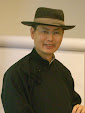
Professor Chung Kai Luk 鍾啟祿 & Issac Chung
[img align=left width=300]https://blogger.googleusercontent.com/img/b/R29vZ2xl/AVvXsEjEUoHn06EfXgYwLCk7OOII5W3lXS486Mzh__Him1iYYHPKaDSodMH34I5hVcyrWgXjXxaDQyUTex_MQEnqBGTYGRJL012LWR4tKoQ501DUdsMXs8XfdBiBqHJldA9JG2m6V5vtOr1e5xzx/s640/91iching041.jpg[/img]
Professor Wong Hoi Luk 黃開祿 & Issac Chung
[img align=left width=300]https://blogger.googleusercontent.com/img/b/R29vZ2xl/AVvXsEhvmjqcFFbrsTI6HI9NEdW605_-N8F9ac-LgdU0hPMRerO3wE8OvhPcdw5E2idrY6oWpymHcOfHEAm0IVwjfT-AcyXnJ7J3KGgVPDTd3cDJAp9JzKlbPThgE9mAehU5bwwqdEPlcNAuap3M/s640/91iching036.jpg[/img]
Singapore I-Ching association president Mr Bernard Sim 沈树圭 & Issac Chung
[img align=left width=300]https://blogger.googleusercontent.com/img/b/R29vZ2xl/AVvXsEhEuzRW8nKvlf_W8wMbBLFc-HnVK1SSYUinbLlfCv7C2l1yiNFD59TQpOvwadudEoh8F7CIBQRg3Y8ox-wV_D6zJA9oPxpHOlDOHJkS-oSBBjzV5qS2uJdTuQa09qI1ABJeNxZmOifORDWw/s640/92Hawaii005.jpg[/img]Korea I-Ching association president 池昌隆 & Issac Chung
For more photos, you can see it in the following link: https://picasaweb.google.com/108459486785411309664 http://www.royalacademicinstitute.com/images/93Booklet.pdf http://www.royalacademicinstitute.com/images/94Booklet.pdf It has begun, it has an end. The end of my activities was after my immigration to Canada. My students in Hong Kong also tasted the meaning of I-Ching: - “Change”. http://www.royalacademicinstitute.com/modules/news/article.php?storyid=252 Chung’s “I – Ching 易經” 3 – What is I-Ching易經 Most of the people misunderstand what is the I-Ching, they mixed up with “I-Ching易經” and “I-Jun*易傳”, it is because they did not get into the history of I-Ching and that’s why they thinked “I-Jun易傳” is “I-Ching易經”. “I-Ching易經” is separated into book 1 and book 2, we call it “Sheung King 上經” & “Hai King 下經”. “Sheung King 上經” constructed by 30 Hexagrams & “Hai King 下經” constructed by 34 Hexagrams. “Sheung King 上經” started with Kin乾 and ended up with Lei離, Hai King 下經 continued with “Haam咸” and ended up with “MeiJai未濟”. Every Hexagrams (we call it Gua卦) have “Gua Ci 卦辭” & “Ngaau Ci爻辭” . That is all it should have in I-Ching. “I-Jun易傳” is all the rest of other contents which included Teon Ci彖辭,ZoengCi象辭,HaiCi繫辭, ManYin文言, SyutGua說卦, ZeoiGua序卦, ZaapGua雜卦. All these contents were only the notes which coming from the Confucius. We cannot call it “I-Ching易經”, we only can call it “I-Studies易學”. *Remarks: all my translation is based on Cantonese; it is because Cantonese maintain its original with too much change in pronunciation and meaning. It is the better tool to understand the ancient classics books without loss too much of the original. If you like to continue read my articles, please [url=http://www.royalacademicinstitute.com/modules/profile/register.php]subscribe[/url] If you like my article, please don’t hesitate to share with your friend by sending them a [url=http://www.royalacademicinstitute.com/modules/news/index.php?storytopic=21]link[/url] or put my [url=http://www.royalacademicinstitute.com/modules/news/index.php?storytopic=21]link[/url] in your website. [code]http://www.royalacademicinstitute.com/modules/news/index.php?storytopic=21[/code] If you like to help me to translate my articles into other language, please don’t hesitate to [url=http://www.royalacademicinstitute.com/modules/formulaire/index.php?id=4]contact me.[/url] http://www.royalacademicinstitute.com/modules/news/article.php?storyid=253 Chung’s “I – Ching 易經” 4 – How many types of I-Ching易經 Start from the first article I was talking is “Chau-I周易”, in fact “I-Ching易經” has 3 types, the first type is “LinShan-I連山易”, the second is “KgwaiChong-I歸藏易”, the third is “Chau-I周易”. Since “Chau-I周易” was more popular spread out after Chau Man Wong 周文王announced his “ManWong BaGua文王八卦” plus our scholar, Confucius孔夫子, gave his notes for the public, which let Chau-I周易 replaced the other two types of I-ching. The other two types of I-Ching were losing the inheritance and gave up by the public. Although some of the text of the other two I-Chings were discovered from archaeological excavation, but it was not a complete copy. It stills have a long way to form the whole picture and get into understanding it. Some of the previous scholars believed that the other two I-Chings were only the procedure of evolution for “Chau-I周易”, but whether it is true or not, we still need to wait for more materials coming from the archaeological excavation to verify this point of view. Nowadays almost everyone talking is “Chau-I周易” , if you think “Chau-I周易” means the whole “I-Ching易經”, your concept need to be adjusted a little bit. Therefore in the near future, I will more focus in “Chau-I 周易” and not the other two I-Chings易經. The “I-Ching易經” that I am talking about is “Chau-I 周易”. If you like to continue read my articles, please [url=http://www.royalacademicinstitute.com/modules/profile/register.php]subscribe[/url] If you like my article, please don’t hesitate to share with your friend by sending them a [url=http://www.royalacademicinstitute.com/modules/news/index.php?storytopic=21]link[/url] or put my [url=http://www.royalacademicinstitute.com/modules/news/index.php?storytopic=21]link[/url] in your website. [code]http://www.royalacademicinstitute.com/modules/news/index.php?storytopic=21[/code] If you like to help me to translate my articles into other language, please don’t hesitate to [url=http://www.royalacademicinstitute.com/modules/formulaire/index.php?id=4]contact me.[/url] http://www.royalacademicinstitute.com/modules/news/article.php?storyid=254 Chung’s “I – Ching 易經” 5 – The core idea of I-Ching易經 Since the theory of “I易” was discovered by our ancestor, FokFei伏羲, the whole “I-Ching易經” were carried the same core idea – “天人合一 Harmonic between man and nature”. That is not only found by me, it was found by anyone who are deep in the “I’s易” principle. If a person is talking about I-Ching but against this basic principle, than the way of his I-Ching is not the original I-Ching易經, which is his own “I易”. In Qin秦 dynasty, I-Ching易經 nearly disappeared in the fire, if it was not Li Si’s李斯 said, “I-Ching易經 is only an augury book”, we don’t have any chance to read this book again. It was the luck of Chinese. I believe a Custodian of I-Ching易經 is existed. Although “I-Ching 易經is only an augury book” gave a chance for I-Ching 易經out of the fire but it also gave a wrong impression for “I-Ching易經 is only an augury book” for public. Therefore a lot of masters who have learnt the “Man Wong Divination文王卦” and think that they know about I-Ching易經. In fact, “Man Wong Divination文王卦” is based on part of “I-Theory易理” to develop. I accept that “I-Ching易經” has a function of divination but divination is not equal to I-Ching易經. Due to “Man Wong Divination文王卦” was widely teaching in the name of “I-Ching Divination易經占卜” before the teacher’s verify its relationship of I-Ching易經. “Man Wong Divination文王卦” and “I-Ching Divination易經占卜” are two different types of divination. One use the YamYang陰陽 and five elements五行 to interpret and the other use I-Ching 易經 to interpret. If no-one to correct this mistake, this concept will continue to mislead the public. http://www.royalacademicinstitute.com/modules/news/article.php?storyid=265 Chung’s “I – Ching 易經” 6 – The Interpretation and Translation of I-Ching If your conversation is recorded and will be played thousands of years later, I can imagine that not too much people will understand the content regardless of the language used. It is because the terminologies and grammars that we use today are different than thousands of years later. Some of the daily products we used today will also be different. If you agreed with my conclusion above, then there is no doubt some I-Chung terms that were once easily understood are difficult to learn now. Therefore I-Ching relies on the interpretation from scholars in different dynasty scholars to keep current. Unfortunately, many scholars have made the same mistake; they twisted the original meaning of those terms as they only reference the terminology to the ones they used in their time. The original environment and style were neglected. Moreover, the biggest damage done to the field is that some interpreters want to improve their own fame and recognition by writing I-Ching even though they have little or no knowledge about it. In fact, refer to the I-Ching scholar Mr Li Kan Chi said, “There are two schools and six lineages 兩派六宗that have used I-Ching to promote their own interpretation, it does not see too much of their interpretation are matched I-Ching”. Hence, you need to be very careful to select the materials. The other bad habit for some scholars is that they are lazy; they had not verified the source of materials before they started writing book or teaching others. There is a Chinese old saying for this, “not to seek deep understandings and verification of the content 不求甚解”. If the first translator had the errors, the rest of translators would pass on the same mistakes. If you don’t believe my analysis, you can buy several I-Ching books from different scholars in different dynasties and you will find their translation are almost the same. Only the organization of the content and their writing method are different. It is clear that they copied each other without performing any deep research. As a beginner, one should never blindly attach to one scholar’s interpretation before one did enough research in the field. As a Chinese saying, “Understanding is coming from hearing all兼聽則明”, always keep yourself open-minded. http://www.royalacademicinstitute.com/modules/news/article.php?storyid=266 Chung’s “I – Ching 易經” 7 – How to study I-Ching If you agree there’s lost in translation, then the original meaning of I-Ching will be downgraded each time a scholar translate the previous scholar’s interpretation. Thus, studying the earliest version of I-Ching will be more important and tasteful. The “Chinese” language has suffered from big loss in comparison to the other languages. If the person who did the translation is not an I-Ching expert, his interpretation is just based on the surface meaning of the text, which could twist the meaning totally. Before I show you the examples, I would like to announce that my analysis is only based on academic perspective; I am not intended to attack anyone personally. Thus, if I misunderstand your point of view, please come to my discussion board to clarify your meaning. Other members are also welcome to express your opinions. http://www.facebook.com/groups/316686908429009/ [img align=left width=300]http://www.royalacademicinstitute.com/uploads/images/img505d39bb1e9a2.png[/img]
[img align=left width=300]http://www.royalacademicinstitute.com/uploads/images/img505d39f89a519.png[/img]
The two articles above are written by my friends, Mr. Joseph Yu. I have no doubt that he has a certain level of understanding in I-Ching and that he has a very good writing skill and teaching skill. Although both articles are in different language, one in English and other in Chinese, the conclusion of both articles is that “Yi (易) is against the predetermine fate.” Joseph also had the following comment: “Nearly all the versions of translated text of Chapter 3 by sinologists cannot get the essense of this chapter. The simple translation of the last sentence is the core meaing of Yi.” [img align=left width=300]http://www.royalacademicinstitute.com/uploads/images/img505d3a7e0d36b.png[/img]
Let’s take a look at another translation by a sinologist, Mr. [url=http://en.wikipedia.org/wiki/James_Legge]James Legge[/url] at http://ctext.org/book-of-changes/shuo-gua [img align=left width=300]http://www.royalacademicinstitute.com/uploads/images/img505d396e2a0de.png[/img]
Mr [url=http://en.wikipedia.org/wiki/James_Legge]James Legge[/url] (December 20, 1815 – November 29, 1897) was a sinologist, and his conclusion from his translation is, “Yi we have (both) anticipation (and the natural process)”. Although I can’t accept Mr. James Legge’s translation fully and my English skill is not as good as both of them, I can see Mr Legge’s translation has not lost the [url=http://www.royalacademicinstitute.com/modules/news/article.php?storyid=265] core idea of I-ching.[/url]( “天人合一 Harmonic between man and nature”). Mr. Yu’s idea, on the other hand, is just the opposite of the fundamental concept of I-Ching. If Mr Yu can find any evidence in I-Ching to support his argument, “Yi is against the predetermine fate”, I am sure many of us would like to listen. Based on his explanation on Chapter 3, it clearly shows his misunderstanding of I-Ching and he should spend more effort analyzing it before publishing his perspective and misleading his audiences. I will analysis his misinterpret in the coming article. http://www.royalacademicinstitute.com/modules/news/article.php?storyid=267 Chung’s “I – Ching 易經” 8 – Chapter 3 of SyutGuaJun說卦傳 天地定位,山澤通氣,雷風相薄,水火不相射,八卦相錯。數往者順,知來者逆,是故《易》逆數也。 The about is the original paragraph of Chapter 3 in SyutGuaJun說卦傳. When we translate it, we need to understand what did the original writer is talking about; otherwise we will make a fundamental mistake in the translation. The original writer explains how did the FokFei BaGua 伏羲八卦 (Inherent Hexagram 先天八卦) form. In the ancient time, the Chinese threaded bamboo or wooden pieces together to form a book, thus it was not convenient to draw any diagrams on it. Base on the description, the readers then could draw the diagram on a cloth or on the sands. [img align=left width=300]http://www.royalacademicinstitute.com/uploads/images/img505e290568b62.png[/img]
FokFei BaGua 伏羲八卦 (Inherent Hexagram 先天八卦) Moreover, the writer didn’t describe the idea too clearly is because he wants to keep some secrets in the book for his lineage. Nowadays we can see the diagrams in the first few pages of any I-Ching books but if you didn’t know this paragraph correlates with the above diagram, it will be quite difficult for you to interpret the whole paragraph correctly. If you go through the translation of Mr Joseph Yu and Mr James Legge, they did not mention anything about the relationship of this paragraph and the Inherent Hexagram先天八卦. This is the first reason I am telling you that they didn’t know about I-Ching. Let us analyze their interpretation by going through each sentence: 天地定位 Joseph Yu (JY) translation: Heaven and Earth occupy determinate positions. James Legge (JL) translation: (The symbols of) heaven and earth received their determinate positions; Issac Chung (IC) translation: Sky (represented by Kin☰) and earth (represented by Kwan ☷) fixed their position. [img align=left width=300]http://www.royalacademicinstitute.com/uploads/images/img505e27bb377e9.png[/img]
天地定位 山澤通氣 JY: Mountain and Marsh communicate with their qi. JL: (those for) mountains and collections of water interchanged their influences; IC: Mountain (represented by Gan ☶) and marsh or ocean(represented by Doi ☱) exchange their energies and breathings (氣Hei) [img align=left width=300]http://www.royalacademicinstitute.com/uploads/images/img505e27ee3faf4.png[/img]
山澤通氣 雷風相薄 JY: Thunder and Wind excite each other. JL: (those for) thunder and wind excited each other the more; IC: The word Bor薄 is hard to understand and some scholars said that Bor薄 is equal to Bor 搏, which means to fight and to take risk. That’s why both of them use excite or excited in their translation. However, Bor薄 itself has its own meaning, which you can be determined as follow: 迫近、接近。文選˙李密˙陳情表:「日薄西山,氣息奄奄。」 - Approach or getting closer, (you can compare with other classic article in the bracket.) 附著。楚辭˙屈原˙九章˙涉江:「腥臊並御,芳不薄兮。」 - Attach, (you can compare with other classic article in the bracket.) 侵入。荀子˙天論:「故水旱未至而飢,寒暑未薄而疾。」 - Invasion or penetration (you can compare with other classic article in the bracket.) Thunder (represented by Jun ☳) and wind (represented by Seon ☴) are approaching each others and both have attached and penetrated each other. [img align=left width=300]http://www.royalacademicinstitute.com/uploads/images/img505e274f45802.png[/img]
雷風相薄 水火不相射 JY: Water and Fire interact but do not shoot at each other. JL: and (those for) water and fire did each other no harm. IC: Water(represented by Hum ☵) also known as moon, Fire(represented by Lei ☲) also known as Sun in the I-Ching, Moon only reflects Sun’s light, and both of their lights do not shoot at each others. [img align=left width=300]http://www.royalacademicinstitute.com/uploads/images/img505e27799ff7f.png[/img]
水火不相射 八卦相錯 JY: Among the eight trigrams, there is mutual correlation. JL: (Then) among these eight symbols there was a mutual communication. IC: (Take a look at the Inherent Hexagram先天八卦) Eight trigrams are opposite to each other, their bars (爻 Ngaau) are mutually opposite to each other, that is positive to negative, negative to positive. [img align=left width=300]http://www.royalacademicinstitute.com/uploads/images/img505e290568b62.png[/img]
FokFei BaGua 伏羲八卦 (Inherent Hexagram 先天八卦) 數往者順 JY: Recollection of the past is natural. JL: The numbering of the past is a natural process.; IC: The numbers already passed is “Shun順” . 知來者逆, JY: Anticipation of the future may be artificial*. JL: the knowledge of the coming is anticipation. IC: To know the future is “Yik逆” 是故《易》逆數也。 JY: Therefore, Yi is against the idea of pre-determined fate. JL: Therefore in the Yi we have (both) anticipation (and the natural process). IC: Therefore “I易” is same as Yik逆 which is used to know the future. From the above comparisons, you can the differences in our perspective. Since both of them did not know this chapter is explaining the Inherent Hexagram plus they were copying from others, they have misinterpreted the meaning. Moreover, Mr Joseph Yu only thought the general meaning of “Yik逆” is against, and did not realize the original sentence has already clearly explained the meaning of “Yik逆” is “to know the future知來者”. His careless or misunderstanding led him to conclude “Yi is against the idea of pre-determined fate”. “I易” is the mother of Chinese metaphysic, if he has misinterpreted I-Ching, I question his understanding in Chinese Classics and whether he makes the same mistakes in other metaphysic’s subjects. When his students follow his misinterpretation and start teaching others, how many beginners would be poisoned by his misconception? http://www.royalacademicinstitute.com/modules/news/article.php?storyid=268 Chung’s “I – Ching 易經” 9 – The Importance of Translation Translation is the method to decode the message that the author wants to convey. From pictogram to our current language, the symbols we use to express ourselves went through many phases of amendments. Even though we still employ the same expression method (communicating through speaking, writing, sign languages, and etc.), the way we use our words changes from time to time – new terms are invented with the advancement of technology, the various wars and conquests, and the changes of emperor. As a result, to fully decode a writer’s writing, reading the text is merely enough. One should put him- or herself into the author’s shoes. To illustrate a problem with Chinese translation, I will share a story with you. My son study Chinese as an elective course in high school; and one day, he came home puzzled and started to discuss what he learned in his Chinese class. That day, his Chinese teacher taught the class some Chinese idioms – as some of you may know, Chinese have a lot of idioms, all of which have story and meaning behind it – and two of which caught his attention (洛陽紙貴 and 塞翁失馬,焉知非福). 洛陽紙貴 literally translated into “the paper in Luo Yang is expensive”. Without doing much research, the teacher explains to the class that Luo Yang was the capital of China, thus the paper there is expensive. Since my son knew the meaning behind each Chinese idiom was never that simple and her explanation doesn’t seem to make too much of sense (some people may think it does make since the living cost in capital is usually higher, but if this the case, why would the idiom only specified paper? So when reading Chinese literature, think deeper), he decided to discuss with me. As a father and an experienced teacher, I asked him to do some research before giving the answer to him directly. Obviously, he was able to find the actual story and the meaning behind this idiom. If you want to know, you should search it online yourself. 塞翁失馬,焉知非福 literally translated “When the old man from the frontier lost his horse, how could one have known that it would not be fortuitous” (http://en.wiktionary.org/wiki/%E5%A1%9E%E7%BF%81%E5%A4%B1%E9%A6%AC%EF%BC%8C%E7%84%89%E7%9F%A5%E9%9D%9E%E7%A6%8F). Since 塞 (Choi) sounds like 蔡 (Choi – a Chinese last name) in Cantonese, the teacher explained that an old man with a last name蔡 lost his horse… Again, this is a fatal error in Chinese; but this time, the teacher did not even read the word when she translated it into English. Many people may find her mistake wasn’t a big deal, but if our education continues like this, how many people will be misled? Since the Chinese class has many Canadian-born Chinese and non-Chinese students, I sent my son’s teacher a letter to inform her about her mistake and request her to re-teach those terms. Many people would worry about their child receiving a lower grade when confronting the teacher’s mistake, but this is a very selfish thought. Misleading and twisting the actual knowledge is way more harmful than receiving a lower grade (and on a side note, my son graduated from the Chinese course with an A+ average). While you may laugh at this story and think it is ridiculous for a Chinese teacher to not only misunderstand the fundamental content of those idioms but also taught the wrong theory to the students, many so called “masters” in the metaphysics field are destroying the field by misleading their audiences. Like my son’s teacher, Mr. Joseph Yu has shown his misunderstanding of I-Ching in his explanation. He maybe a good converter in terms of converting Chinese text to English, but his review and “analysis” clearly indicate his ignorance in translation. His behaviour is totally unethical. To understand the problem with his interpretation, you can view my other article at: http://www.royalacademicinstitute.com/modules/news/article.php?storyid=267 http://www.royalacademicinstitute.com/modules/news/article.php?storyid=268 http://www.royalacademicinstitute.com/modules/news/article.php?storyid=269 Chung’s “I – Ching 易經” 10 – 5 Mistakes learner of I-Ching should avoid (P1) After reviewing Mr. Joseph Yu’s descriptions on I-Ching and SyutGuaJun說卦傳, I found his main problem is that he believes I-Ching’s prime focus is on divination and astrology. This is a crucial mistake that all of you should learn and avoid. This is also why his explanation of what is I-Ching is totally false. Like many other scholars and practitioners, I really want the readers to acquire an unbiased perspective when reading I-Ching and I strongly hope everyone can utilize the knowledge that our ancestor have passed to us. [url= http://www.royalacademicinstitute.com/uploads/images/img506151177e3b5.png ][img align=left width=300]http://www.royalacademicinstitute.com/uploads/images/img506151177e3b5.png[/img][/url] The issue with studying I-Ching in the divination perspective is that the person will only concentrate on fate as we can see in Mr. Joseph Yu’s case. His main conclusion is that “[t]he core idea of Yi is to change”. If he has read the I-Ching and understand it, he wouldn’t make this mistake and misled his readers and students. There are five major issues with Mr. Joseph Yu’s perspective of SyutGuaJun說卦傳. Hence, let us review his problems together: 1. “The core idea of Yi is to change” The idea of “Yi 易” has 3 meanings in I-Ching: - Simple; - Not Change; and - Change I-Ching teaches us the universal law, which allows us to understand the nature. First, simple or simplicity is the idea to make things in the simplest form. Not Change or Non-Change is things that don’t change – i.e., so far, birth and death is inevitable. Change focuses on items that can be changed, such as to change our behaviour to cope with the nature better. Through the idea of “simple, not change and change”, we will then be able to achieve the core of I-Ching, “天人合一 Harmonic between man and nature”. From this review, we can see Joseph only picked up one of the principle of I-Ching, “Change”. While this is not totally wrong, this perspective is too bias and narrow-minded. Hence, readers of his post should be aware this first issue and put greater thoughts when reading Joseph’s explanation. In fact, I would suggest learners of I-Ching should read more, research more, and place themselves into the time frame of writers as it will assist them to better understand I-Ching. Trying to observe the nature and people who are “close” to the nature (such as some non-modernized cultures in Africa) will be helpful. http://www.royalacademicinstitute.com/modules/news/article.php?storyid=270 Chung’s “I – Ching 易經” 11 – 5 Mistakes learner of I-Ching should avoid (P2) The Second Issue with Mr. Joseph Yu’s Perspective of SyutGuaJun說卦傳: Anticipation of the future is artificial知來者逆– Let’s take a look at the meaning of anticipation
[img align=left width=600px]http://www.royalacademicinstitute.com/uploads/images/img506151177e3b5.png[/img]
an•tic•i•pa•tion
noun
1.
the act of anticipating or the state of being anticipated.
2.
realization in advance; foretaste.
3.
expectation or hope.
4.
previous notion; slight previous impression.
5.
intuition, foreknowledge, or prescience.
fu•ture
noun
1.
time that is to be or come hereafter.
2.
something that will exist or happen in time to come: The future is rooted in the past.
3.
a condition, especially of success or failure, to come: Some people believe a gypsy can tell you your future.
4.
Grammar .
a.
the future tense.
b.
another future formation or construction.
c.
a form in the future, as He will come.
5.
Usually, futures. speculative purchases or sales of commodities for future receipt or delivery.
know
verb (used with object)
1.
to perceive or understand as fact or truth; to apprehend clearly and with certainty: I know the situation fully.
2.
to have established or fixed in the mind or memory: to know a poem by heart; Do you know the way to the park from here?
3.
to be cognizant or aware of: I know it.
4.
be acquainted with (a thing, place, person, etc.), as by sight, experience, or report: to know the mayor.
5.
to understand from experience or attainment (usually followed by how before an infinitive): to know how to make gingerbread.
The above explanation is from http://dictionary.reference.com/
Translating “知” to “anticipation” reflects Mr. Joseph’s ignorance in Chinese, especially in the context of I-Ching and Confucian.
The proper word should be "know". Since SyutGuaJun說卦傳 is commonly known as a literature written by Confucius, it is logical to refer to his other literatures to investigate the meaning of "知". In the Confucian Bible, Confucius said, “When you know a thing, to hold that you know it; and when you do not know a thing, to allow that you do not know it - this is knowledge.- JL” (知之為知之,不知為不知,是知也). Hence, it clearly shows the word “know” is a better choice because it has a broader meaning, and more importantly, it includes the idea “understanding”. Anticipation, on the other hand, does not concern about the reasons for something to happen nor contain the “knowledge” component in the idea.
Moreover, I-Ching talks about three ideas: Simple, Not Change, and Change. Hence, the word “anticipation” is an inadequate word as it doesn’t cover all of those ideas. For example, you don’t say, “I anticipate people will die” because it is a fact (at least at the writer’s time and in our current time). The word “Know” has the implication to perceive or understand as fact or truth, which is similar to “知” in this context. Remember, Yi (易) describes the nature law.
From his explanation of “知” , we can clearly see Mr. Joseph Yu is poorly educated in ancient Chinese literature. Both the word "知" in Chinese and the word "know" in English don’t contain any idea about future is set (or fixed). Hence, Joseph’s argument, “To ‘know’ the future implies that the future cannot be changed”, clearly shows his confusion between the word “know” and the idea of “future”. A simple way to look at it is that “to know” implies the person has acquired what he or she believes the appropriate knowledge, such as in the context of “I know science” or “I know this person”. The depth of the knowledge is not being measured, and the word “know” is mainly associated with a person’s internal thought.
“Future”, on the other hand, is something more in the external side; hence, there are many factors that can influence it. Obviously, some of you may argue when you say “I know it will rain tomorrow” means I am certain (100% sure) it will rain tomorrow where as “I anticipate it will rain tomorrow” indicates I predict it will rain tomorrow (not 100% sure). However, in a macro perspective and the context of SyutGuaJun說卦傳, “know” does covers more than the prediction component, it also indicates the reason why the future is happening in this way.
While “know” implies understanding is a fact, it includes the component of experience. When reviewing a sentence or paragraph, whether ancient passage or modern writing, one should not read each word separately. One should understand the main idea.
Based on Mr. Joseph Yu’s argument, not only did it reveal his lack of understanding in language arts, but it also demonstrated his thoughts and argument are illogical and weakly structured.
If you like to continue read my articles, please [url=http://www.royalacademicinstitute.com/modules/profile/register.php]subscribe[/url]
If you like my article, please don’t hesitate to share with your friend by sending them a [url=http://www.royalacademicinstitute.com/modules/news/index.php?storytopic=21]link[/url] or put my [url=http://www.royalacademicinstitute.com/modules/news/index.php?storytopic=21]link[/url] in your website.
[code]http://www.royalacademicinstitute.com/modules/news/index.php?storytopic=21[/code]
If you like to help me to translate my articles into other language, please don’t hesitate to [url=http://www.royalacademicinstitute.com/modules/formulaire/index.php?id=4]contact me.[/url]
http://www.royalacademicinstitute.com/modules/news/article.php?storyid=271
Chung’s “I – Ching 易經” 12 – Message from the heaven
Inside the HaiCi繫辭 Chapter 10, it stated
易无思也,无為也,寂然不動,感而遂通天下之故。非天下之至神,其孰能與於此。
Therefore, when a superior man is about to take action of a more private or of a public character, he asks (the Yi), making his inquiry in words. It receives his order, and the answer comes as the echo's response. Be the subject remote or near, mysterious or deep, he forthwith knows of what kind will be the coming result. (If the Yi) were not the most exquisite thing under heaven, would it be concerned in such an operation as this? - JL
The fortune cookie maker should be read my I-Ching posts, otherwise how could I get this message in my dinner tonight? Interesting! HaHa!
[img align=left width=300px]http://www.royalacademicinstitute.com/uploads/images/img5063bbe7d4859.png[/img]
[img align=left width=300px]http://www.royalacademicinstitute.com/uploads/images/img5063bc0f1763a.png[/img]
http://www.royalacademicinstitute.com/modules/news/article.php?storyid=272
Chung’s “I – Ching 易經” 13 – 5 Mistakes learner of I-Ching should avoid (P3)
The Third Issue with Mr. Joseph Yu’s Perspective of SyutGuaJun說卦傳:
Mr Joseph Yu explained the Chinese word “Yik 逆” as “artificial”, which is cannot reveal the truth meaning.
[url=http://www.royalacademicinstitute.com/uploads/images/img506151177e3b5.png][img align=left width=300]http://www.royalacademicinstitute.com/uploads/images/img506151177e3b5.png[/img][/url]
According to http://dictionary.reference.com/
ar•ti•fi•cial
adjective
1.
made by human skill; produced by humans (opposed to natural): artificial flowers.
2.
imitation; simulated; sham: artificial vanilla flavoring.
3.
lacking naturalness or spontaneity; forced; contrived; feigned: an artificial smile.
4.
full of affectation; affected; stilted: artificial manners; artificial speech.
5.
made without regard to the particular needs of a situation, person, etc.; imposed arbitrarily; unnatural: artificial rules for dormitory residents.
As we can read from the dictionary, artificial is something man-made or not natural. In Mr. Joseph Yu’s explanation, including how he defined “Yi 易” and his later article where he stated “We can anticipate what we will encounter in the future but it is up to us within the limits of our capability whether to change the outcome or not”, implies that predicting the future requires the involvement of a person’s thought and his/her capability to change. While this maybe correct, and I am glad to see that he is getting closer to the door of I-Ching, his reasons and choice of word cannot adequately disclose the full meaning.
Again, I-Ching is not only used for divination and astrology, it describes the law of the nature. Hence, “Yik 逆” has a greater meaning than what he described.
Let’s take a look in the meaning of “Yik 逆” in Chinese dictionary.
[url=http://dict.revised.moe.edu.tw/cgi-bin/newDict/dict.sh?cond=%B0f&pieceLen=50&fld=1&cat=&ukey=-787838663&serial=1&recNo=27&op=f&imgFont=1]- 迎接。書經˙顧命:「以二干戈,虎賁百人,逆子釗於南門之外。」宋˙蘇軾˙留侯論:「楚莊王伐鄭,鄭伯肉袒牽羊以逆。」
- 接受。左傳˙昭公二十五年:「有司逆命,公之使速殺之。」
- 違背、不順從。如:「忤逆」、「忠言逆耳」。孟子˙離婁上:「順天者存,逆天者亡。」宋˙歐陽修˙縱囚論:「不立異以為高,不逆情以干譽。」
- 抗拒、抵抗。戰國策˙齊策三:「恐秦兼天下而臣其君,故專兵一志於逆秦。」
- 不順的。如:「逆境」。
- 倒出的。如:「批其逆麟」。
- 反、倒。如:「倒行逆施」、「反向逆行」。唐˙杜甫˙復愁詩十二首之一:「野鶻翻窺草,村船逆上溪。」
-預先。如:「逆料」。三國˙蜀˙諸葛亮˙聞孫權破曹休魏兵東下關中虛弱上言:「凡事如此,難可逆見。」
-背叛者。如:「討逆」。晉˙劉琨˙與石勒書:「得主則為義兵,附逆則為賊眾。」[/url]
I won’t translate those in English, so non-Chinese speaking audience can use the Google translator to see the meaning in English. However, none of them included the idea of “artificial” in the meaning.
http://www.royalacademicinstitute.com/modules/news/article.php?storyid=273
Chung’s “I – Ching 易經” 14 – 5 Mistakes learner of I-Ching should avoid (P4)
The Fourth Issue with Mr. Joseph Yu’s Perspective of SyutGuaJun說卦傳:
Mr Joseph Yu concluded Chapter 3 as “Therefore, Yi is against pre-determined fate”. This is the most ridiculous thought in explanation.
[url=http://www.royalacademicinstitute.com/uploads/images/img506151177e3b5.png][img align=left width=300]http://www.royalacademicinstitute.com/uploads/images/img506151177e3b5.png[/img][/url]
If fate is pre-determined, that means fate cannot be changed. Hence, future also cannot be changed. In this case, any change afterward is no use, and any of his explanation afterward is rubbish because it contradicts with his fundamental belief. "We can anticipate what we will encounter in the future but it is up to us within the limits of our capability whether to change the outcome or not", if fate is pre-determined, how can you change the outcome? This is the crucial fallacy in his logic and a fatal error that readers should be aware and avoid.
Let me ask you this, “if you can change the outcome, is it truly because of your effort or a result of predetermined fate?”
http://www.royalacademicinstitute.com/modules/news/article.php?storyid=275
Chung’s “I – Ching 易經” 15 – 5 Mistakes learner of I-Ching should avoid (P5)
The Fifth Issue with Mr. Joseph Yu’s Perspective of SyutGuaJun說卦傳:
Mr Joseph Yu said, “Although the words 逆 and 易 have the same pronounciation in Cantonese, they are two entirely different words and cannot be mixed. Making such a mistake will end up having your buttocks beaten by your primary school teacher.”
[url=http://www.royalacademicinstitute.com/uploads/images/img506151177e3b5.png][img align=left width=300]http://www.royalacademicinstitute.com/uploads/images/img506151177e3b5.png[/img][/url]
數往者順,知來者逆,是故《易》逆數也。
逆 is about "reversing" the future to the present just like reverse engineering. How does this relate to I-Ching? First part of the sentence talks about the past (from 0 to the present), and second part of the sentence refers to the present from the future. And the third part of the sentence referenced to second part of the sentence in explaining what is “Yi易”. Hence, it is not only a shallow way of thinking if we focus only on the pronunciation, but also ignorant to the Chinese style of writing. Someone must got a lot of spanking when he was a child as he blindly ignore the whole sentence and focus on things irrelevant to what has been written.
Based on Mr. Joseph Yu’s challenge, we can see that either he has a poor observational skill or he like to put down others by twisting their words.
In these five articles, I have pointed out the five major fallacies with Mr. Joseph Yu’s explanation of SyutGuaJun說卦傳. However, the most important problem is not in how he explained the sentence, 數往者順,知來者逆,是故《易》逆數也 (the explanation of what is “Yi易”. The core issue is on his weak foundation in I-Ching. While everyone can have his/her own thoughts, it is definitely unethical when that person tries to mislead others when he or she hasn’t obtained enough knowledge about the subject. I am an old-school person, and I believe a person must be able to understand the subject and practice it fully before he teaches.
To help the readers to understand this sentence, 數往者順,知來者逆,是故《易》逆數也 (The numbers already passed is “Shun順”. To know the future is “Yik逆”. Therefore “I易” is same as Yik逆 which is used to know the future), please review when did this sentence come up. In this chapter, it begins with “天地定位 (Sky (represented by Kin☰) and earth (represented by Kwan ☷) fixed their position )…” so you have to determine if “Shun 順” and “Yik逆” have any relations with Inherent Hexagram (先天八卦).
Hint: why would one talk about the position of the Trigrams and switch to the passed numbers and knowing the future? Reminder: it is within the same chapter.
If you like to continue read my articles, please [url=http://www.royalacademicinstitute.com/modules/profile/register.php]subscribe[/url]
If you like my article, please don’t hesitate to share with your friend by sending them a [url=http://www.royalacademicinstitute.com/modules/news/index.php?storytopic=21]link[/url] or put my [url=http://www.royalacademicinstitute.com/modules/news/index.php?storytopic=21]link[/url] in your website.
[code]http://www.royalacademicinstitute.com/modules/news/index.php?storytopic=21[/code]
If you like to help me to translate my articles into other language, please don’t hesitate to [url=http://www.royalacademicinstitute.com/modules/formulaire/index.php?id=4]contact me.[/url]
If you like to join my discussion group, please click the following link:
http://www.facebook.com/groups/316686908429009/
http://www.royalacademicinstitute.com/modules/news/article.php?storyid=276


 Posts